How to Troubleshoot Like a Pro

Jordan Elgie • July 22, 2026

If you’ve spent any time behind a console, in a booth, or backstage, you know this feeling well. The lights stop responding. A video signal refuses to appear where it’s supposed to. A strange hum suddenly shows up in the PA five minutes before doors.


Troubleshooting is one of those universal skills in audio, lighting, and video — no matter your role, your venue, or your experience level. And while every system is different, the way you approach a problem matters just as much, or possibly even more, than tools you have in front of you.


Recently, we surveyed 15 industry professionals across live sound, lighting, broadcast, and theatre. Different backgrounds, different disciplines — but their advice lined up almost unanimously:


When you’re troubleshooting a problem, follow your signal path and only change one thing at a time. It sounds almost too simple. But this mindset is what separates efficient problem-solving from panic-driven cable swapping.


Follow the Signal Path

Every technical system — audio, lighting, or video — follows a logical signal path. And when something goes wrong, this is where disciplined troubleshooting really matters.


As you move through that signal path, the rule stays the same the entire time: only change one thing at a time. Not one change per device. One change — then test.


Start at the beginning of the signal chain and work forward step by step. At each point, ask yourself two very specific sets of questions:

  • Do I have signal here? And just as important: is it the right signal?
  • Do I have power here? And again: is it the right power?

Those questions alone will eliminate a huge amount of guesswork.


Once you’ve answered them, you can then ask the next burning question:

Where exactly does the system stop behaving the way I expect?


That’s how you narrow down the problem instead of chasing ghosts.


When you make a change — swap a cable, adjust a setting, move a patch — test it. If it didn’t fix the issue, change it back before moving on. This keeps your system in a known state and prevents you from stacking changes on top of each other.


Working this way might feel slower in the moment, but it’s dramatically faster in the long run. You stay oriented, you stay calm, and you always know what actually helped — and what didn’t.


One Change. Then Test.

Here’s the part people know… but don’t always follow under pressure.


Change one thing. One cable. One fixture. One channel. One setting.


Then test.


If it didn’t fix the issue, change it back. Only then do you move on to the next change.


Why is this so important? Because changing five things at once might feel faster — but it guarantees confusion. If the problem suddenly goes away, you won’t know which change actually solved it. And if it gets worse, you won’t know what caused that either. Systematic troubleshooting gives you clarity. It turns a stressful moment into a controlled process.

Stay Calm, Stay Methodical

This approach does more than fix the immediate problem. When you slow down and work methodically, you don’t just get signal back — you learn something about your system. You understand where it’s fragile, where mistakes commonly happen, and how to avoid that issue next time.


And just as importantly, staying calm keeps you from introducing new problems while trying to solve the original one.


Good troubleshooting isn’t guesswork. It’s a process.


Stick to that process and you’ll solve problems faster, save shows more often, and keep your stress levels (mostly) manageable.


Want to Go Deeper?

If troubleshooting is something you want to get better at — and let’s be honest, we all do — we break this down in much more detail in our Resource Stage Troubleshooting Seminar. We walk through real-world scenarios, common failure points, and practical strategies you can apply immediately in your own venue or production environment.


You can watch the full seminar here.

How Horizon Solutions & Resource Stage Can Help

At Horizon Solutions, we exist to bring practical and reliable audio, video, and lighting solutions to the people who depend on them. Through Resource Stage, we extend that support beyond installs and gear into education, training, and real-world problem solving.


We offer:

  • On-site training for your technical team, tailored to your space, your equipment, and your real workflows.
  • Technical consulting and service to help diagnose and resolve persistent issues that keep resurfacing.
  • System design and equipment guidance rooted in long-term reliability — not quick fixes.


We’ve built strong relationships with a range of institutions, municipalities, and organizations and we’d love to talk about how we can support your next project — whether that’s staff training, troubleshooting a stubborn issue, or planning your next system upgrade.


When you’re ready for solutions that prioritize both quality and practicality, Horizon Solutions and Resource Stage are here to help.
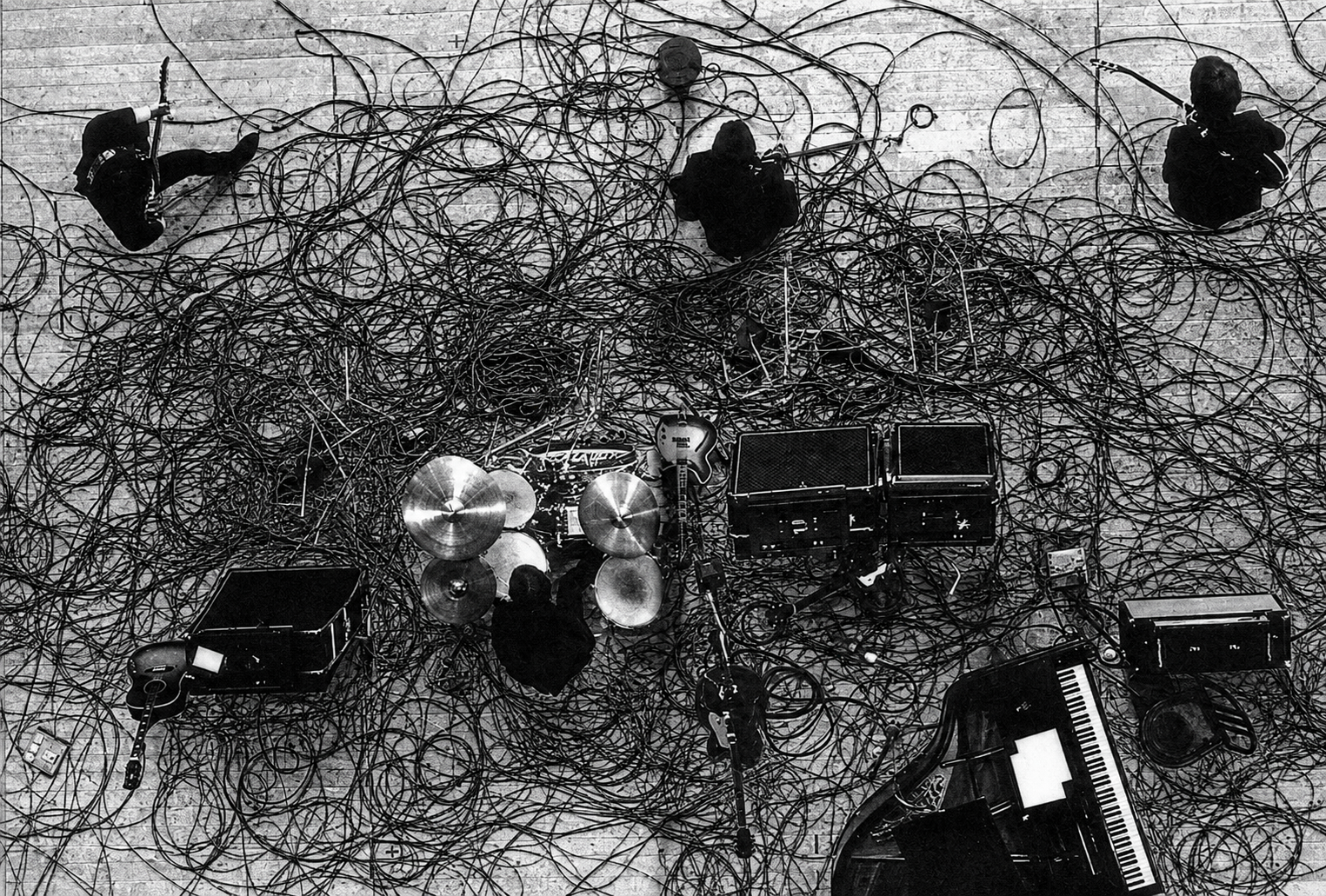
Black-and-white scene of tangled wires and scattered objects on a table, with several small figures around it
By Jordan Elgie June 9, 2026
Step 1: Plan Your Cable Paths Before you start plugging things in, take a moment to plan your routes. Run cables in straight lines where possible, and try to avoid high-traffic areas. Running your cables along walls, and the backs of set pieces or risers often make for cleaner, safer paths. Even in the best setups, it’s not always possible to avoid crossing where someone might walk. That’s where gaffer’s tape earns its reputation as a tech’s best friend.
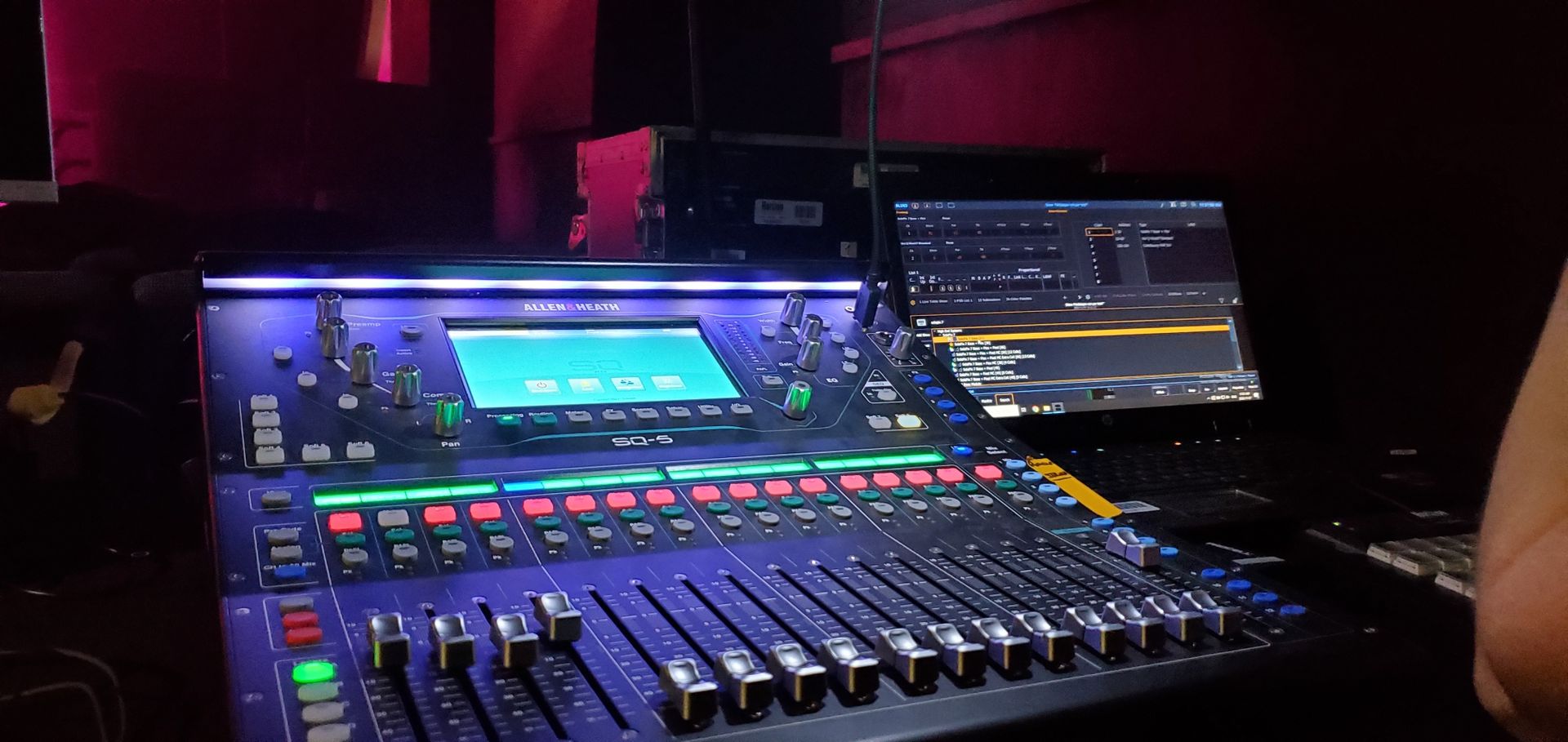
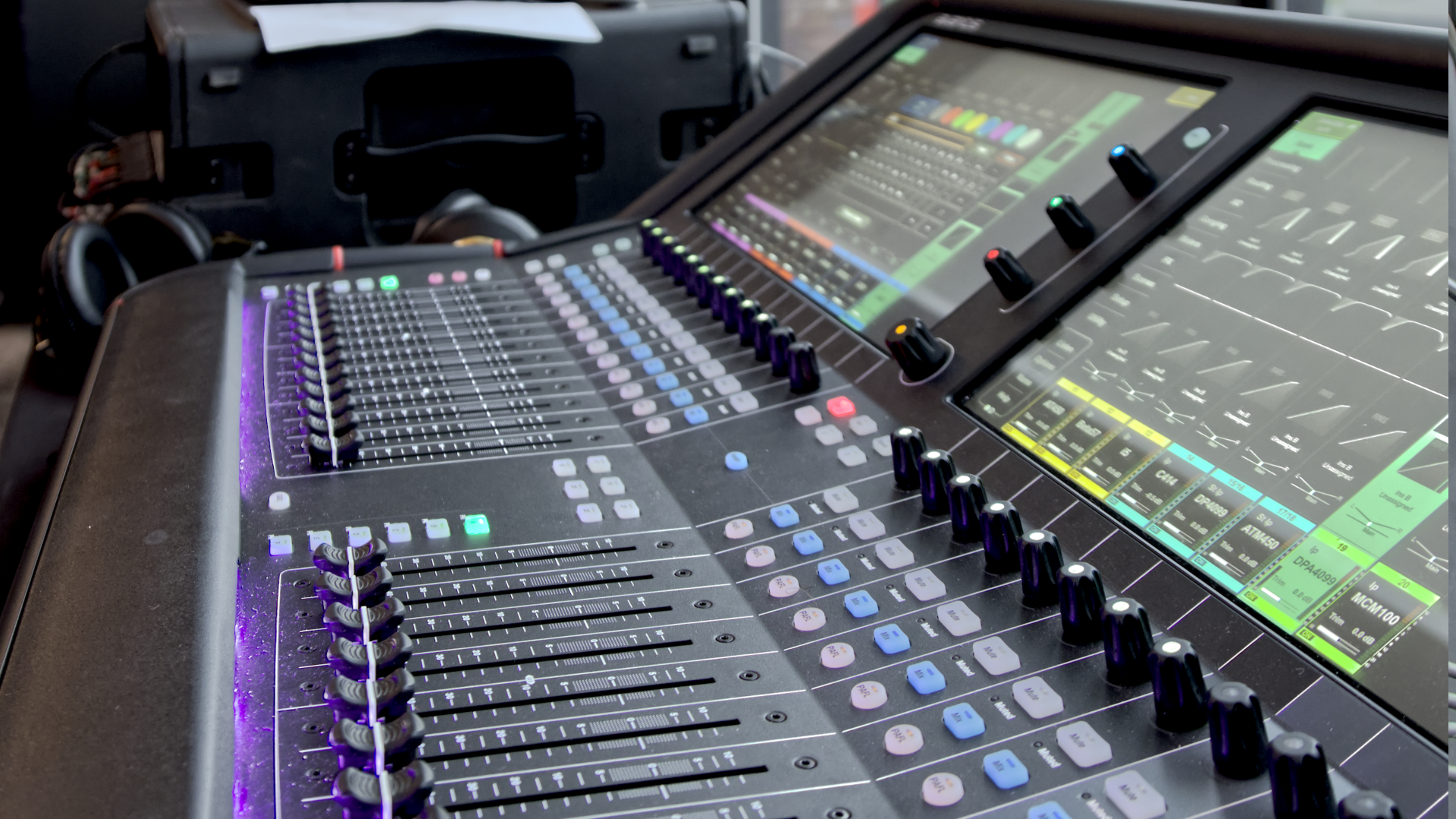
Digital audio mixing console with large touchscreen, illuminated buttons, and faders.
April 15, 2026
Learn how to set mic gain properly for cleaner audio, less feedback, and more consistent sound in live events, worship, and productions.
A conference room with a large screen on the wall and a wooden table.
November 19, 2024
When it comes to procurement for professional audio, lighting, and video services, is it possible to balance the “best price” and “best service”? We think it is! Below are some insights that may help you navigate this challenge. The Challenge of Price-Driven Procurement Many municipalities and organizations are required to purchase from the vendor offering the lowest price. But is this approach always the best? As taxpayers, we want assurance that public money is being spent appropriately, and that there’s no room for favouritism or backdoor deals. The intent is good, but in practice, this system often results in a “bare bones” solution. The theory behind it is to guard against preferential treatment or collusion, ensuring that public funds are used responsibly. However, focusing solely on the lowest price can often result in solutions that are less than ideal. 
A person is sitting in front of a mixer in a dark room.
By Jordan Elgie November 19, 2024
Essential Tips to Enhance Your Audio Experience – From Training to Equipment Upgrades
People on stage with Christmas decorations, performing for a seated audience in a hall.
October 8, 2024
Upgrade Your School's Audio and Stage Systems for a Superior Experience
By David Brown July 29, 2020
It certainly has been different times dancing on Zoom for over 2 months. Now we are coming up on a new dance season. Everybody has different levels of confidence in returning to activities and that is perfectly fine. Some kids can not wait to get back in the studio. Some want to continue but would like to do so from home. Of course, depending on class size there may be a rotation where you spend two weeks in the studio and one week at home. Maybe you will dance in the studio like normal (with new physical distancing guidelines) but want to practice at home. With these new situations Rosco has made a kit version of their popular dance floor called the Marley Mat . The floor that is used in the Rosco Marley Mat is a lighter weight version of Adagio floor that we use in our studios. That makes it perfect for dancing at home for all types of dance including ballet, jazz, acro, lyrical and even tap . It will have the same feel and “speed” of the studio floor. Being a lighter weight material allows the floor to be rolled up when not in use and unrolled and used immediately. The Marley Mat kit can be purchased for $ 149.00 (price current as of July 2020) plus shipping and tax. The package comes with a 5’ 3” by 6’ section of black or grey floor, and a roll of tape that would allow you to lay down and tape the floor 5 times. Additional tape can be purchased. You can find and purchase the kit from StageStore at the following link. StageStore is a great supplier in Ontario of theatrical type products. https://www.stagestore.ca/product/rosco-marley-mat-kit/
By Carl Lukings July 27, 2020
Captain Kirk had his handheld communicator. Captain Picard wore his communicator on his chest. But neither captain could call back to the ship without having a mic close at hand. The ability to be clearly heard on a call or video conference without a mic being close to the "talker" has been far fetched sci-fi for years. But not now. With a building requirement for video conferencing and the quest to remove all cables and distractions from the meeting space, microphone manufacturers have been applying science and engineering to meet sci-fi requirements. A handful of innovators like Shure have developed mics that don't look like traditional mics or act like traditional mics. These microphones are hidden, looking like ceiling tiles or mounted on the wall looking almost like sound bars under a TV (they're not sound bars!) But everything we know about microphone technology would suggest that having a mic far away from the source is a recipe for disaster.
By Carl Lukings June 9, 2020
Canadian churches have been away from their church buildings for months throughout the Covid-19 epidemic. Now that churches are starting to get back into the physical worship space there is a lot of questions as to how this is going to happen. Here are some technology tips that can help your church make the transition successfully. 1 - STREAM WITHIN THE BUILDING With reduced numbers of people allowed in one room you can use the church’s streaming system to stream your service online and then, using a computer or smart TV in a separate space, you can stream the service to others in the building. This can be done a few ways including on your existing building network or using the Internet. 2 - MAXIMIZE YOUR PROJECTION SYSTEM As contact with physical hymnals and paper bulletins is being questioned by many, your church may want to consider using your projection system for more content than in the past. If you don’t use a projector regularly this may be a good time to look into that.
By Carl Lukings May 25, 2020
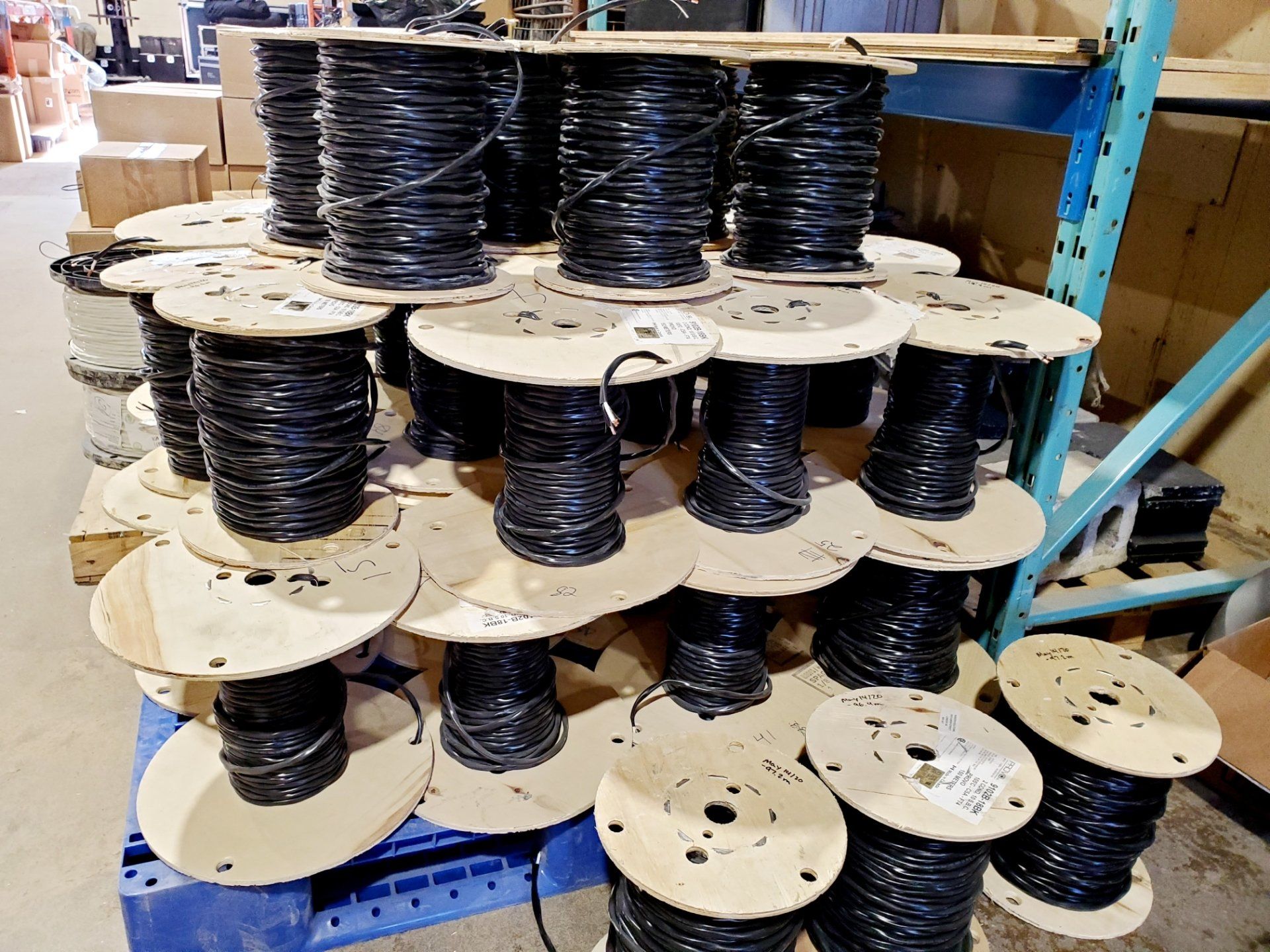
Miles, or should I say kilometers of wire. But the truth is that we use a lot less than we used to. Back in the 1980’s we didn’t have digital audio snakes or DMX cables for lighting. And every video line was a coax cable or multiple coax bound together. A simple audio snake could be an inch in diameter for just a couple dozen channels. But that was then. We’ve come a long way in the last 30-40 years, but we still run a lot of wire. It’s just different now. So, how much wire does go into a world class theatre? For the last six months Horizon Solutions’ crew has been pulling wire into the new Tom Patterson Theatre in Stratford, Ontario to support the new Audio and Video systems. There is a lot of wire there. To be clear this wire does not include the lighting systems, nor does it include the cables that plug from plates into the pieces of equipment. Those are a completely different story.
By Carl Lukings May 15, 2020
When the Canadian Mental Health Association Lambton-Kent (CMHA) contacted Horizon they knew they had a problem because it was hard to hear in their spaces. But what the best solution was, well that wasn't exactly clear. It didn't take long for Don Klassen (Horizon Solutions System Designer) to ascertain that the room acoustics was a significant problem. High levels of reflections was the biggest issue. But a traditional answer with panels on the walls wasn't going to work for the centre as they had spent significant money on the design of the space with interesting walls and a new wood treatment on the ceiling. Back in the office, Don was able to take the onsite measurements and findings to develop a plan utilizing two different treatment types and sizes. The resulting design became a solution that would both meet the needs of the CMHA staff and clients while also fitting into their budget. "Everything looks great! We're excited to experience the difference..." Our Horizon install team got the panels installed in good time leaving the space looking and sounding fantastic. Now the CMHA First Response Team can talk on the phone with clients in a quiet environment. They can better focus on the client's call rather than being distracted by others in the room. And the activity room can be used without the distraction of a noisy space. If your room's acoustics are making it hard for your team to work or your group to be together, contact Horizon Solutions and we can help you find an acoustic solution to your problem.
By Carl Lukings April 29, 2020
My parents liked the change and my father was often looking for a new challenge with his work in IT. One of the things I have always remembered whenever we moved into a new home was how the house felt so hollow with no furniture, just blank walls and floors. It was even more noticeable in an empty bathroom. I remember my brothers and I standing in an empty bathroom hollering at the top of our lungs, listening to the echo. Although I had very little interest in sound or audio at 12 years old, I understood something about acoustics. When the shower curtain and bath towels were hung, the bathroom quickly went from being a cavern to a small room. The principals haven't really changed much over the years. The fact is, some rooms, for numerous reasons, have acoustic characteristics that make them much more reverberant than others. Sometimes it's the hard uncovered surfaces. Or it could be a tin-pan ceiling. More often than not it's the physical dimensions of the room, allowing for some frequencies to reflect for a long period of time before diminishing. One way to determine and quantify the "issue frequencies" is to play a frequency sweep within the space and then record the playback with a microphone in the room. What this does is provide us the ability to "hear" and analyse how the different frequencies are responding in the space. Using a measurement referred to as the RT60 we are able to determine which frequencies and to what extent each frequency is a problem. From there, we're able to take that information and determine how much acoustic treatment is required to bring the RT60 reverberation time down to a reasonable level.
By Carl Lukings April 29, 2020
It seems that every business out there wants to be everything to everyone. You can buy a bar-b-q at the grocery store, clothes at a car dealership and scented candles at the hardware store. It's very confusing. Do you remember when clothing stores sold clothes and computer stores sold computers? And record stores sold more music than they did movies! Oh those were the days, when things made sense. I suppose some of these make sense. I mean the guy at the car dealership should know something about what to wear so you look good when you're driving a new car. And the grocer probably knows something about using a bar-b-q, right? This all brings us to the "closer to home" discussion, what does a guy who is a good guitar player know about sound systems? And is the musical instrument shop the best place to buy sound equipment? I could fill this page with all the reasons why buying a sound system from a musician is a bad idea and I could give you all kinds of examples of customers who've come in voicing regrets of purchases they've made because they bought the wrong thing or an inferior piece of gear because "it was a good deal and they had it in stock." But that seems like the wrong approach. Instead I'm hoping that between this post and our next we will be able to give you some insight into what it is that we do at Horizon and what makes our audio system designs different. A logical place to start. Every design begins with the client's needs. That might be surprising to some, but we never start with equipment, we start with a needs analysis. In some instances this begins on paper with a complete survey we go through with the client. In other cases it's simply a discussion around what your goals are, who the users are, how you need to use the system and what your expectations are regarding quality, longevity and value.